Scouting is split into sections so that every young person does activities that suit their age. Cubs and Scouts both meet on Fridays at our hall at 47 John Mackenzie Drive, Emmarentia.
Cubs, ages 7 to 11
Fridays, 6pm to 7pm. Motto: Do your best.
With the emphasis on fun, our Cubs learn to work as a team while they enjoy being outdoors. They are encouraged to do their best in everything they do. Cubs follow the Cub trail, learning new skills, playing games, doing creative crafts and taking part in camps and community projects. Along the way they make friends and earn badges.
Scouts, ages 11 to 18
Fridays, 7pm to 9:30pm. Motto: Be prepared.
Action and adventure through outdoor activities. Leadership skills and respect for yourself and others are an important part of our programme. Scouts follow the Scout trail, which includes hiking, camping, swimming, survival skills, first aid and more. They belong to a patrol, and take on real responsibility for planning and running things.
Rovers, ages 18 to 30
Action and adventure through outdoor activities, with leadership skills and service. Rovers indulge their love of the outdoors while being of service to others, and they help to run District events such as the Strauss Shield. We can put you in touch with local Rover crews.
Patrols
Scouts belong to a patrol, a small team that camps, cooks, plays and learns together. Our patrols are named after birds, such as the Eagles, Falcons, Kestrels, Owls, Kingfishers and Ravens. Each patrol has a Patrol Leader and an Assistant Patrol Leader, who wear white stripes on their uniform pocket so everyone can tell who is in charge. Patrols compete through the year, and the winning patrol is awarded a belt of honour at our EPIC camp.
The Scout journey
Cubs who are ready to move up work on a Link Badge, which prepares them for life in the Troop. Every Scout then works through the advancement levels: Trail to Traveller, Track to Discoverer, Road to First Class and the Path to Springbok.
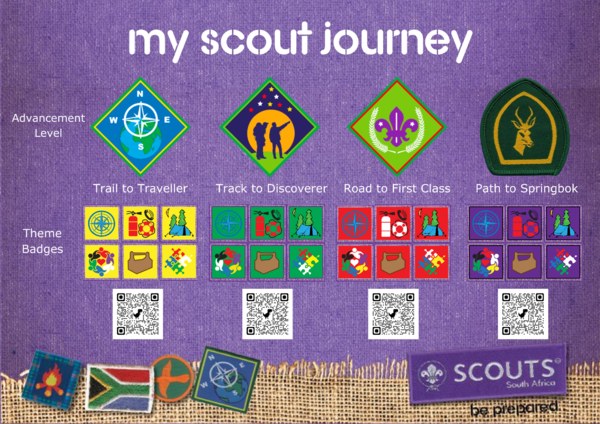
The first two levels teach the basics: map reading, camping, pioneering (ropes and knots), first aid, observation, backwoodsman skills, hiking and personal development. At the senior levels Scouts begin teaching others and planning their own activities. Instead of learning to use a compass, an older Scout plans a two-hour orienteering exercise for the whole Troop. Instead of learning to light a fire, they plan and run an overnight camp.
It works both ways. Younger Scouts need the camps older Scouts organise to progress, and older Scouts need people to attend so they can sign off their own requirements.
Badges
Beyond advancement, Scouts can earn more than 90 interest and scoutcraft badges. To earn one, a Scout prints the page from the Badge Book and asks a Scouter to arrange an examiner. The badge books are on our Resources page.
What a typical meeting looks like
- Opening and the plan for the evening
- Games and activities that build skills and teamwork
- Badge work, such as knots, first aid or navigation
- Closing circle and a few words about what comes next
Not sure which section fits your child? Send us a message with their age and we will point you in the right direction. They are welcome to come along to a meeting first.